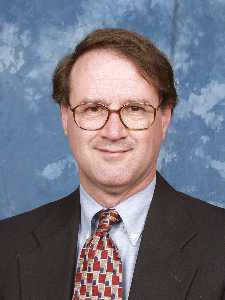
Interview on the Future of the Academic Library
Responses by
Jim Rettig
University Librarian, University of Richmond
January, 2004
If you have any comments about this interview, you may contact Jim Rettig at:jrettig@richmond.edu.
1.Question from Betsy Park, Head of Reference at the University of Memphis
1. "In 2004, the government will begin to implement a reengineering plan for the ERIC database. It appears that this reeingineering will mean fairly substantial changes in the this database. What implications will this have for librarians, educators and others who turn to this source for information and do you think this trend will continue and affect other databases , such as PUBMED?"
1. It is too soon to judge the results of the “reengineering” of ERIC. However during the past several years Washington has taken disturbing actions that have curbed access to databases supported by the federal government. The U.S. Department of Energy was forced to shut down the PubScience database in November 2001. PubMed could also be vulnerable. Under pressure from the commercial information industry, the rationale was that the federal government should not expend its resources on information access projects that the private sector can also provide. I can’t help but wonder if this argument isn’t a wolf masquerading as a sheep.
Why such suspiciousness? It isn’t hard to be skeptical about the federal government’s information policies since September 2001. The most recent ill-conceived action is the FBI’s December 24, 2003, warning to law enforcement agencies to be alert for people carrying almanacs.
The rationale is that an individual with an almanac and behaving suspiciously may be planning a terrorist act. If you are having trouble connecting the dots here, the FBI says that terrorists might use almanacs “to assist with target selection and pre-operational planning.” After all, almanacs often include information on the world’s tallest buildings and longest bridges, etc.—as do general purpose encyclopedias, occasional magazine and newspaper articles, and various Web resources. That raises the question of what next? Atlases and maps? The FBI’s line of thinking suggests as much.
For example, I live in a tourism town (Williamsburg, Virginia) and almost daily I see people driving cars with license plates from other states, examining maps, and acting suspiciously through erratic driving. Maybe they are planning a terrorist attack. After all, “The Farm,” the CIA’s training camp, is adjacent to Williamsburg. Or maybe they are just innocent tourists trying to find their way around an area whose roads can easily confuse a visitor.
2. Question from Betsy Park, Head of Reference at the University of Memphis:
" What do you think the future is for virtual reference services, particularly given the relative lack of instant success of these services? How much effort would you put in these services ?"
2. In most libraries that have experimented with virtual reference (including mine), the results have not yet made the case that this is an important service worthy of reallocation of resources. Part of the problem may be the limited number of hours each week that most libraries have offered virtual reference.
Since immediacy of response is an expectation in chat transactions, it makes sense to assure that a staff member will be able to respond quickly and remain focused on the chat exchange until it concludes successfully. This has meant assigning response to chat sessions to a librarian stationed away from the reference desk. That desk, of course, continues to be staffed for walk-in service.
Since other modes of reference remain viable (even if in decline), it is a challenge to allocate personnel to this service for a sufficient number of hours that users will be able to assume its availability most any time. Most of the technical challenges—being able to co-browse with the user, being able to assume control of the user’s computer to demonstrate a sequence of steps, capturing a transcript, pushing pages—have been resolved .
Once these tools can be integrated with the IM systems many of our users rely on—especially today’s college students, high school students, and kids—virtual reference services will be part of the environment rather than a distinct, deliberate destination
As mobile wireless access becomes more common, students and business people may be more disposed to use virtual reference services. But even if there are significant improvements to infrastructure and an increase in the public’s reliance on wireless communication, that won’t be enough to make virtual reference a library service that requires significant resources and that enjoys a high profile in diverse communities.
The other essential ingredient is heightened awareness among our publics of not just this service’s availability, but also its value—which leads to your next question.
3. Here is a question from Betsy Park, Head of Reference at the University of Memphis
"How can libraries market their services?"
3. This is a tough one for all of us. We know just how incredibly valuable the library can be to a community—the challenge is helping people in the community recognize how our collections and services can help them. ALA’s @ your library® campaign offers ideas that colleagues have used and proved in their communities. Academic librarians who haven’t taken advantage of the many tips in ALA’s @ your library® Toolkit for Academic and Research Libraries should download the PDF or order a copy and comb it for ideas that can work in their institutions. What is suitable and effective for one college may not work in another.
In planning marketing and publicity campaigns each library should identify the needs of the community it serves and develop services to meet those needs. Then it should develop a message that will convey the potential of those services, and then distribute that message through the mass communication channels that will reach the intended audience. Because a lot of noise inevitably clutters mass communication channels, it takes persistence and time to command attention amidst the din.
The best marketing, of course, is word of mouth by satisfied library users who tell family and friends. About twenty-five years ago in a language lab at the University of Dayton, I overheard a conversation between the student attendant and another student. They were discussing some matter of fact (perhaps a sports record) and disagreeing.
The lab attendant told his friend that they could call the reference desk at the library and get the correct information right then and there. The second student expressed amazement about this, but called anyway. When he got off the phone he told the attendant what he had learned about the matter of fact and, through his enthusiasm about the service he had just received, told me that he would be a repeat user and perhaps even recommend reference service to other students.
4. Question from Mary Ellen Pozzebon, Reference and Instruction Librarian at Jackson State Community College
" What are your strategies for balancing print collections with resources that are available through subscription services or on the Internet?"
5. Question from Barbara Dewey, Dean of Libraries at the University of Tennessee at Knoxville4. Each year a higher percentage of my library’s materials budget goes to electronic resources. That increase, of course, causes a decrease in the share of budget devoted to print. This is a reasonable response to ever increasing acceptance of online among faculty and students’ expectation that information (perhaps all information) come that way. These trends will continue. It pains me greatly to say it, but the future of the printed reference book may be bleak.
As publishers take content from many individual sources and combine that content in subject-defined online resource centers, the stand-alone originals that provide some of that content lose value. Specialized, fairly static, small print run reference titles will continue to be published, will retain value, and will not find their way into broader resource center collections. If a library needs one of these books to meet its user community’s needs, it will acquire it. So print won’t disappear completely, but it will continue to consume a smaller percentage of the budget each year.
The most challenging issue in the print-online dichotomy is whether or not to go exclusively with online for journal subscriptions. Maintaining duplicative print and online subscriptions just doesn’t make sense as library budgets are squeezed by multiple forces.
So each library needs to decide which is more important to its users—the assurance over the years of access to printed journal volumes, or the immediacy and convenience of online with the risk that the license will be canceled and there will be no current access and no backfile to show for all the years of annual payments. The preference for print or online as a matter of institutional policy is not a decision library staff can make alone.
The user community needs to be involved in the discussion. This is especially important in academic communities in which faculty may have strong views and valid arguments for one or the other.
"What kinds of services should reference librarians be developing for the virtual or digital library?"
6. Question from Barbara Dewey, Dean of Libraries at the University of Tennessee at Knoxville5. Reference librarians working on their own probably won’t be able to develop the virtual library’s needed services and resources. They will need to work with collection development specialists and technology specialists to develop some of them. Community information files stored on paper and available only at a service point within a library building need to become publicly accessible and searchable databases. Other community-specific information also needs to be organized and go digital.
Some resources already exist. For example, every library homepage makes the local OPAC available and organizes its licensed electronic resources for users’ convenience. Given that more and more library use is now done remotely and without interaction between information seeker and library staff, a useful set of resources would be tutorials on issues such as how to evaluate information, how to craft Boolean searches, how to select the the appropriate database for a particular need. These, of course, would require the sort of promotion the library as a whole needs, as discussed in question #3 above. And such user aids need catchier names than the deadly, “help,” a potent repellent to use.
Reference librarians should also be vocal advocates for improvements in interactive online reference systems. They know better than anyone the strengths, the weakness, the deficiencies, etc., of these systems. The vendors need to hear these users’ recommendations. After all, who can analyze and critique an information system better than reference librarians?
"What is the most desirable balance for reference librarians between being available 'desk' and going out into academic departments throughout the campus/school or venues throughout the community in the case of a public library?"
6. I’ll confine my comments to the academic environment I know well. I won’t presume to know enough about this in relation to public libraries. As long as we have physical libraries (and I think that will be forever since at least a part of the written record will always be three-dimensional), we will need to provide some sort of service point where users can obtain assistance.
While information kiosks can answer a wide range of simple, unambiguous questions, the complexity of information resources combined with the complexity of the systems (e.g., classification schemes, LC subject headings) used to organize those resources indicate that a knowledgeable human should also be available. This needn’t be a librarian.
But it does need to be someone trained well to recognize the limits of his or her knowledge of information systems and sources—in other words someone who recognizes the point at which to refer a question to someone with the expertise needed to answer it. That points not so much towards abolition of the reference desk as significant change in staffing it, and maybe even in what we call it.
Paraprofessionals can staff the service point and make the appropriate referrals to reference librarians. That will free reference librarians to spend more time developing relationships with faculty and academic departments. This yields a number of benefits:
- increased demand for course-specific instruction
- a higher profile among students for the library and its services
- a face and name students come to see as a positive representation of the library as a whole
- better understanding by the librarians of their user community’s needs
- more interaction and requests for reference service made directly to the librarian who works with faculty and students in a given department.
Reference service delivered outside the reference desk model is not represented in our statistics quantifying reference service. We need to find ways to include this activity. It may be that the apparent national trend towards less reference service is really a national trend towards redistribution of reference service among various delivery modes.
The hardest mode to measure will be self-service reference conducted to a user’s satisfaction through use of the resources we make available through our Web sites. Desk-centric reference statistics fail to take into account all of the modes through which we currently deliver service.
7. Question from Scott Cohen, Library Director at Jackson State Community College
"What are your 5 most favorite reference sources (both in print and electronically?"
7. About twenty years ago I developed the “Desert Island” feature in Reference Services Review. For each issue I would ask a noted reference librarian to identify the ten reference sources he/she would want to have in order to operate an information service on a proverbial desert island.
Some contributors simply couldn’t limit themselves to ten choices. I allowed them one or two extras. So, I am going to give myself that same liberty in relation to the number five.
a. My favorite reference source changes constantly. It is always the one that meets my or another’s immediate need for some sort of information. Today it was the ALA Handbook of Organization!
b. My next choice is a composite of three sources:
- The local OPAC
- OCLC’s WorldCat
- Amazon.com
Each of these has its own strengths and each can learn from the others ways to improve. Amazon offers an attractive model for making our OPACs more useful and informative. The inclusion of authoritative “editorial reviews,” the images of book jackets, and the suggestions of related books are worthy of emulation. This last feature personalizes the user’s experience of the database in a way that lateral searching of LC subject headings in an OPAC just doesn’t. Our OPACs, on the other hand, can teach Amazon the value of not having amateurish reader “reviews.” Those are not reviews!
c. Unless I need to use it for something else, the CD-ROM/DVD drive in my laptop is always occupied by Merriam-Webster’s 11th Collegiate Dictionary, just one click away. I call upon it very frequently. I hope that M-W will come out with an improved version such as the combined dictionary-thesaurus with audible pronunciations such as I enjoyed using with the 10th Collegiate.
d. World Almanac—I choose this both as a timely form of protest in favor of the freedom to read and out of nostalgia. When I was about age twelve my parents gave me the then current World Almanac as a gift. Perhaps I was, shall we say, an atypical twelve-year-old; I was intrigued and enchanted by this eclectic storehouse of fact. I even (FBI, please note) carried it about and encouraged others to ask questions I could answer from it. Yet it was more than another ten years before I saw this sort of activity as a career opportunity!
e. Google.com. It works! What reference librarian doesn’t use it? Last summer a reporter for BusinessWeek Online interviewed me for an article about use of the Web as a comprehensive information source. At the interview’s end the reporter asked me if I wanted to say anything more. I said, “Librarians use Google and people who use Google should also use libraries.” That line didn’t make it into the article; but it’s true.
f. And now for my lagniappe—The Chicago Manual of Style, 15th edition. Anyone writing for publication deserves a good editor to assure that one’s words make the best impression possible in public. And every editor deserves authors who submit copy that allows the editor to focus on the message rather than on the mechanics. And that is where the Chicago Manual of Style comes in.
Thank you for this opportunity!
Biography of Jim Rettig James Rettig is university librarian at the University of Richmond in Richmond, Virginia. He earned his MALS at the University of Wisconsin at Madison after earning a BA and an MA in English at Marquette University.
Throughout his career he has been active in reference librarianship as practitioner, author, critic, theoretician, and reviewer. Prior to taking his present position in 1998, he held reference and administrative positions at Murray State University, the University of Dayton, the University of Illinois at Chicago, and the College of William and Mary. He has made presentations and published numerous articles on reference librarianship, with a focus recently on its future and on the role of information fluency. From 1981 through 1999 he was author of the “Current Reference Books” column in the Wilson Library Bulletin and its Web successor, “Rettig on Reference.”
He has been active in the American Library Association and currently serves on its executive board and its Council. He has served as president of ALA’s Reference and Adult Services Division, has chaired the ALA Publishing and Organization committees, and has served on a variety of committees in ACRL, LAMA, and RASD/RUSA.
He contributed a chapter to and edited Distinguished Classics of Reference Publishing (Phoenix: Oryx Press, 1992), a collection of histories of landmark reference books. In 1993 it received the American Library Association’s G.K. Hall Award for Library Literature. He has also received the Isadore Gilbert Mudge Citation for contributions to reference librarianship, the Louis Shores-Oryx Press Award for achievement in reviewing, and the Information Access Corporation’s Information Authorship Award for the best article in Online in 1996-97."
He can be reached at: Boatwright Memorial Library University of Richmond Richmond, VA 23173 jrettig@richmond.edu
